



Empty Nest, Fresh Start: Reclaiming Your Space, Your Closet, and Your Sanity
There comes a specific moment that almost every mother quietly dreads. The last box is loaded, the car pulls out of the driveway, and she walks back inside to a house that looks exactly the same as it always has, but feels completely different.
The sports gear is still in the garage, the kids’ artwork is still on the walls, and their room is still their room, just emptier. She stands in the middle of the quiet and thinks, “What do I do with this place now?”
For millions of women, this milestone isn’t just about square footage. It’s a profound shift in identity. It’s about standing in a home that was built entirely around everyone else’s schedules, meals, and messes, and finally asking what she actually wants for herself.
I sat down with Abby Kahn, the brilliant founder of Abb-solutely Organized here in Scottsdale, to talk about why the empty nest is one of the most powerful opportunities a woman will ever have to reset. We dove into how to let go of the past without losing your memories, and why reorganizing your closet might just be the most radical, life-changing act of self-care you commit to this year.

From Classroom Chaos to Client Homes
Yoli: Most people don’t know that you started your career as a kindergarten teacher. How on earth did that path lead you to becoming one of Scottsdale’s most sought-after professional organizers?
Abby: I’ve honestly always been this way, even as a little girl, I was the one helping my friends clean out their closets! But teaching really sharpened my eye for systems. Setting up my classroom was my absolute favorite thing to do every single August.
I was constantly thinking about how to create a space where kids could do their best work, where everything had a designated home, and where the environment itself made them feel calm and ready to focus. When I became a mom and we moved into our house, I poured all of that energy into our home, especially the playroom. Friends started asking me to fix their chaotic spaces, and I realized this was my true calling. Teaching children and organizing homes are deeply connected; both are about creating environments where people can actually breathe and thrive.
Yoli: You talk a lot about helping clients create positive emotional connections with their spaces. Can we pull back the curtain on what that actually means when someone opens a door in their house?
Abby: It’s the difference between walking into a room and instantly feeling your shoulders hike up to your ears from that low-level anxiety of clutter, versus walking in and feeling an immediate sense of ease. You’re finally at home.
Most women don’t even realize how much their physical environment is hijacking their daily mood. They just feel vaguely stressed, perpetually overwhelmed, and they can’t quite put their finger on the trigger. When we organize a space around how a woman actually lives (not how a magazine says she should live), the energetic shift is instant. I’ve had clients stand in their newly finished spaces and just take a massive exhale for the first time in years. That physical exhale is exactly what I’m chasing.
The Midlife Pivot: Empty Nests and New Chapters
Yoli: You work with women navigating major life transitions. What is actually happening beneath the surface when the last child leaves, and the house goes quiet?
Abby: It’s this intense, quietly overwhelming cocktail of liberation and total paralysis. On one hand, she finally has permission (maybe for the first time since her twenties) to make her home completely, unapologetically hers. On the other hand, she realizes she’s been organizing her life around everyone else for so long that she genuinely doesn’t know what her own style is anymore.
What I see constantly is that the clutter isn’t really about the physical stuff; it’s about identity. The kids’ rooms become default storage units because clearing them out feels like closing a massive chapter of her life. And it is. My job isn’t to rush her through that grief. It’s to help her honor that beautiful chapter while making literal and emotional room for the next one.

Yoli: Let’s be real, the empty nest isn’t the only thing hitting us at this stage. Is that the main trigger that brings women to your doorstep, or are there other shifts at play?
Abby: The empty nest is huge, but divorce and downsizing are equally common catalysts. In fact, women in their 50s and 60s are often trying to navigate all three simultaneously. The kids have left for college, a long marriage has ended, and suddenly she’s moving into a smaller condo with thirty years of accumulated family life stuffed into boxes.
What unites all of these women is a universal question: What matters to me right now, and what can I let go of? That is an incredibly powerful, sometimes terrifying question to sit with. It’s an absolute honor to be the person who stands in the room and helps her answer it.
The Psychology of Letting Go (Without the Guilt)
Yoli: Your personal motto is less is more, which sounds lovely on paper. But for a woman surrounded by decades of family memories, that can feel completely impossible, if not downright cold. What do you say to her?
Abby: I always tell her that less is more doesn’t mean stripping your home down to sterile minimalism or throwing away things you adore. It simply means being deeply intentional about what gets to stay. When you keep every single thing, nothing is special anymore. When you carefully curate what surrounds you, the pieces that remain become genuinely meaningful.
I also gently remind my clients: you do not have to keep every physical object to honor the memory it holds. You can take high-quality photographs of your child’s kindergarten drawings, compile them into a beautiful, slim photo book, and confidently release the mountains of crumbling construction paper. You can keep one of your mother’s favorite sweaters instead of twelve. The love doesn’t live in the wool or the paper; it lives in you. The item was just the storage unit for that feeling.
Abby’s Three Categories of Weight We Carry
|
The Clutter Type |
Why We Keep It & How to Release It |
|
Guilt Items |
Gifts from loved ones that we secretly dislike but keep out of obligation. (Let them go; the thought counted, the item doesn’t.) |
|
Aspirational Item |
Outfits and objects are kept for an imagined version of who we think we should be, rather than who we are. |
|
Sentimental Excess |
Bins of duplicate photos, old-school papers, and tech wires are buried in the garage, untouched for a decade. (If it’s invisible, it isn’t bringing joy.) |
Yoli: Oh, the aspirational items hit home. We see that in the fitting rooms all the time, women holding onto clothes for a body or a lifestyle they had fifteen years ago, or a size they think they should get back to. I am guilty of this as well!!
Abby: Exactly! It creates this invisible weight that women carry around without even realizing it. Every time they open that closet door, they are facing a visual checklist of perceived failures or past versions of themselves. That is a terrible way to start the morning.
Yoli: So what is the single biggest mistake women make when they finally snap and decide to tackle the clutter on their own?
Abby: Trying to conquer the entire house in one weekend. They wake up motivated on a Saturday morning, pull every single item out of three different closets, and by 2:00 PM, they’re sitting in the middle of a literal mountain of chaos, crying, and feeling far worse than when they started.
My advice never changes: start incredibly small. Pick just one drawer. Get that single space feeling pristine, organized, and functional before you even look at the next one. The momentum from one small, clean victory is remarkably powerful. It makes the next step feel exciting rather than exhausting. Small, consistent progress beats one overwhelming, stressful weekend every single time.

The Closet: Your Morning Launchpad
Yoli: If a woman walks into your office today and says, “Abby, I am entirely overwhelmed. Tell me exactly where to put my hands first,” where do you send her?
Abby: The main bedroom closet, every single time, without question. Think about the psychology of it: your closet is the very first thing you interact with when you open your eyes each morning. If you open those doors and see a space that is calm, clear, and organized, it sets a grounded tone for your entire day. If you open it and face a wall of tight waistbands, wrinkled fabrics, and chaos, you are already defensive and stressed before you’ve even put on your shoes.

A closet should reflect exactly who you are today, right now. Not the corporate wardrobe from a decade ago, and not the pre-baby jeans. Having a wardrobe that fits your current body and your current lifestyle is one of the most underrated gifts you can give yourself. It guarantees fifteen minutes of pure peace every single morning for the rest of your life.
Yoli: I couldn’t agree more. We talk to so many midsize women who feel completely invisible in the fashion world because everything out there is either designed for a 25-year-old influencer or looks like a shapeless sack. They have a closet full of clothes and absolutely nothing to wear because the industry refuses to design for a changing body.
Abby: Yes! And that brings us to the beautiful parallel between organizing a physical home and curating a wardrobe. They both boil down to the exact same foundational question: Does this piece still serve who I am today?
Women hold onto clothes out of history, guilt, or that classic line, “I might need this for an event someday.” But the pieces that actually make you feel incredible and pulled together are the ones that honor your present self. When your wardrobe and your living space are aligned with the woman you are becoming in this next chapter, a massive shift happens. You walk differently. You take up space with real confidence.

Designing for Real Life, Not Pinterest
Yoli: What about the woman who is starting completely from scratch after a major life disruption, like a divorce or downsizing into a new Scottsdale condo? How does she build a system from zero?
Abby: Don’t rush out to buy organizational bins on day one. You need to live in the space for a few weeks first. Pay attention to your natural habits. Where do you instinctively drop your keys when you walk through the front door? How do you actually move through the kitchen when making your morning coffee? Which drawers do you open every single day, and which cabinets do you completely ignore?
Once you understand your natural human traffic patterns, then we build an organizational system around your real habits, not the idealized, perfectly styled version of life you see on social media. Organization only sticks long-term when it’s completely honest about who you are and how you function.
Yoli: Let’s talk about maintenance, because we’ve all organized a space only to have it descend back into chaos three months later. How do you build a system that actually lasts?
Abby: It has to be utterly effortless. If a system requires five steps and perfect discipline to put a single item away, it’ll completely fall apart within a fortnight. The best organizational setups are those where putting something back in its home takes the same physical effort as dropping it on the counter.
I also remind every client that a home is meant to be lived in, not treated like a sterile museum. A little daily mess is just proof that you are human. The goal isn’t perfection; the goal is a home where you know exactly where everything lives, where clutter doesn’t pool on every flat surface, and where you feel a wave of genuine relief the moment you walk through the door. That is a home that is working for you, not against you.

The Evolution of Storage: Embracing Natural Textures
Yoli: Is there one specific organizational trick or product that you find instantly changes the entire visual volume of a room?
Abby: Visual consistency is everything. When you store items on a shelf using uniform, clearly labeled containers, your brain instantly registers the space as peaceful and orderly, even if those bins are completely packed to the brim. Mismatched plastic tubs and random cardboard shoe boxes create an immense amount of visual noise, even if the contents inside are perfectly sorted. Uniformity creates instant optical peace.
Right now, we’re also seeing a massive, welcome shift away from cold, clear plastic storage. We’re moving toward rich, natural materials such as bamboo, rattan, seagrass, and beautiful woven baskets. These textures feel much warmer, look intentional, and honestly hold up far longer. Your storage shouldn’t look like a utility closet; it should feel like a natural extension of your home’s decor. It should be something you feel proud of when a guest opens a cabinet.
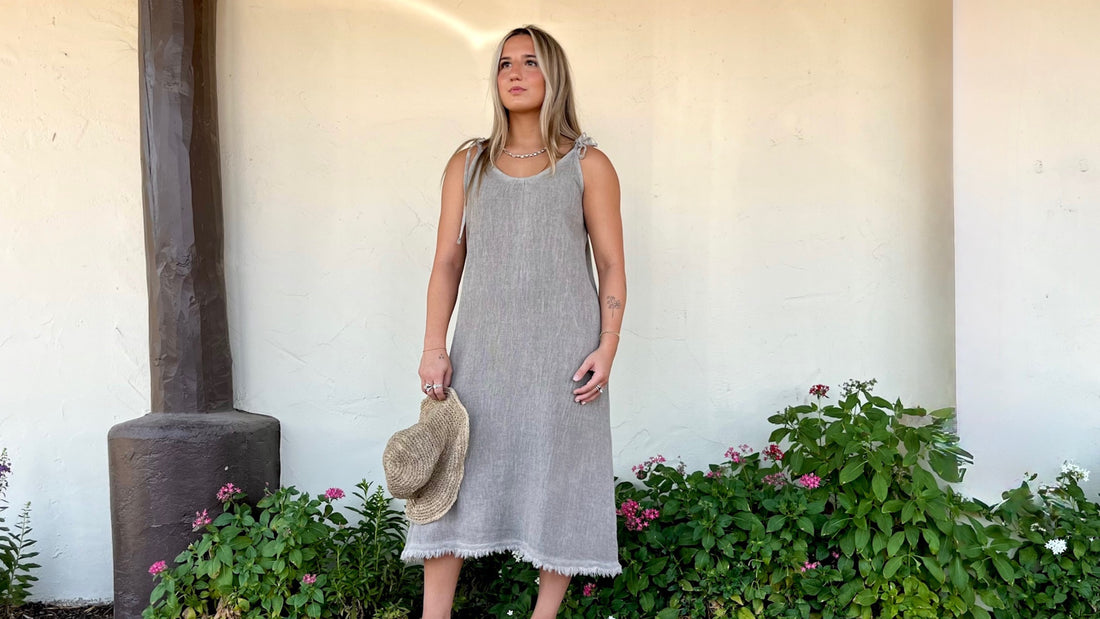
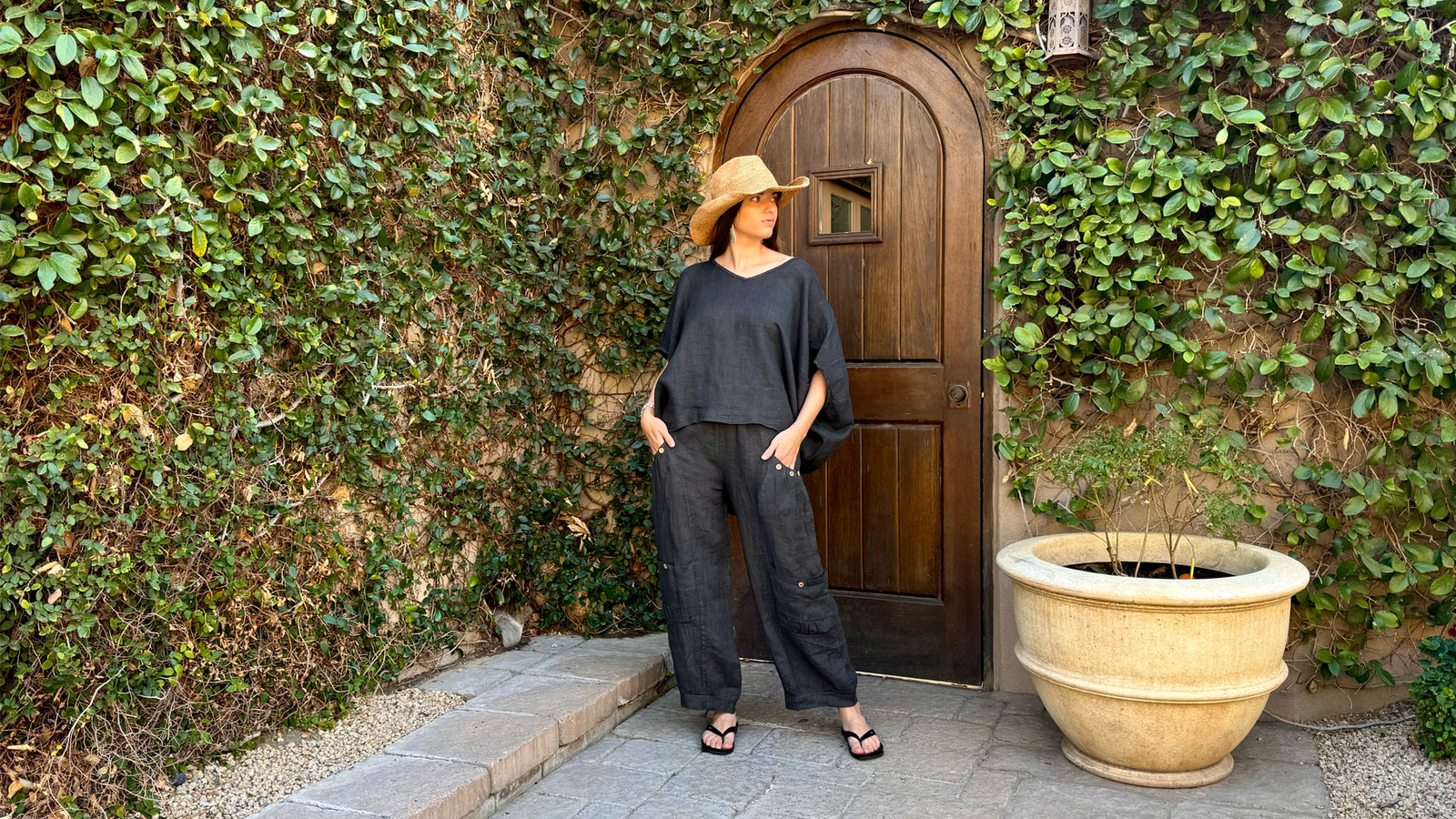
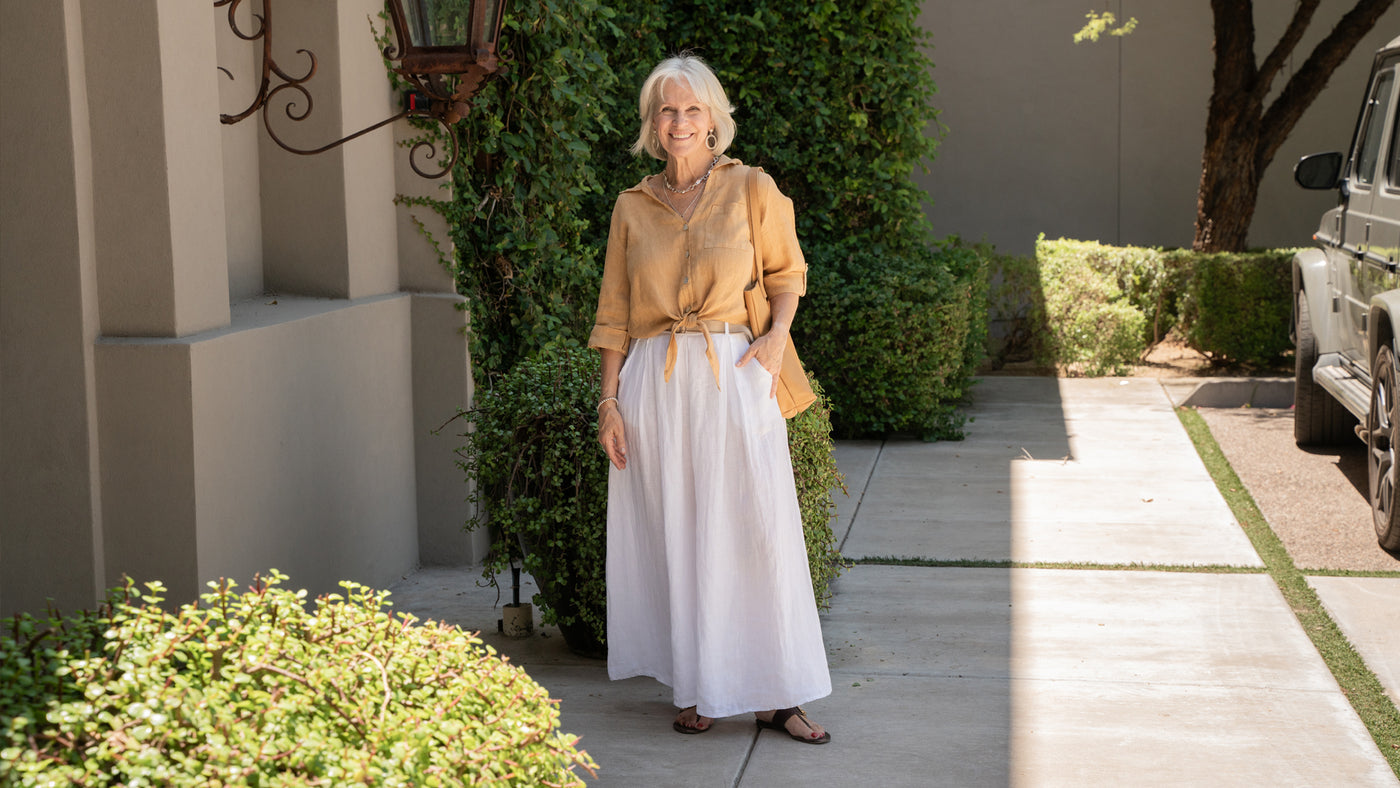
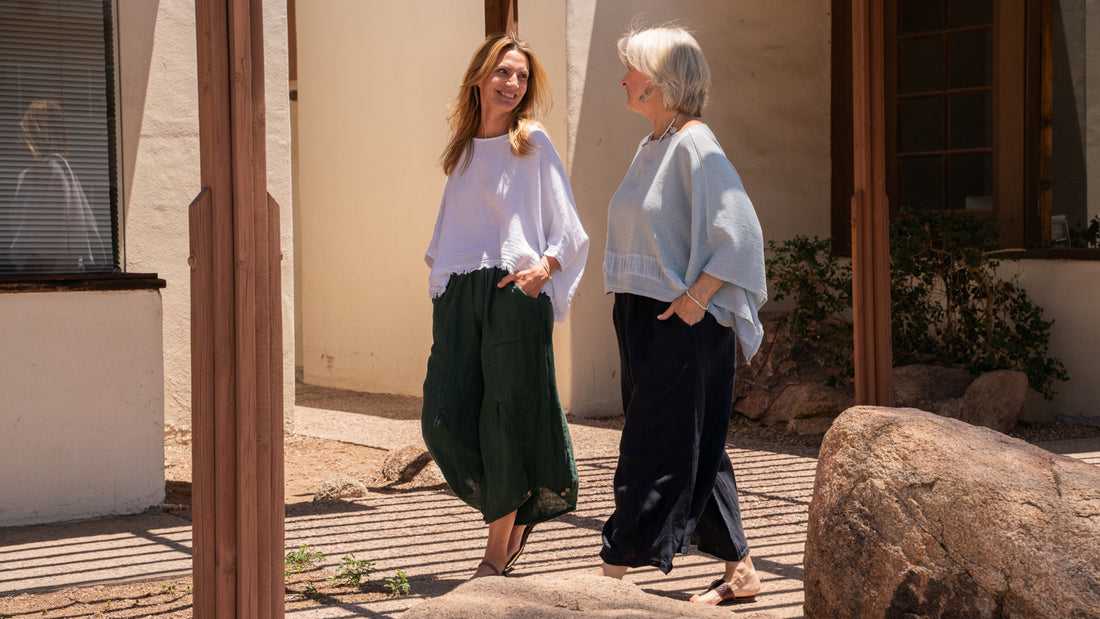
Yoli: That resonates so deeply with what we do at Conscious Coterie. We build our entire collection around natural materials, including 100% Italian linen, Mexican cotton, and vegetable tanned leathers. There is an organic weight and beauty to natural materials, whether you’re talking about the basket in your living room or the linen jacket on your back. They drape beautifully, they breathe, and they carry a sense of effortless, classy style that synthetics just can’t mimic.
Rapid Fire with Abby
Most overrated organizing advice? “If you haven’t used it in a year, get rid of it.” That rule completely lacks nuance. Context always matters. Some things are deeply sentimental, some are highly seasonal, and some are simply waiting for the exact right moment to be used again.
The one space every woman should tackle first? Her bedroom closet. Every single time, without question. It is the launchpad for your entire day.
The most emotional moment in your line of work? When a woman opens her completed closet for the first time, looks inside, and just... lets out that massive exhale. Sometimes there are tears. Not because she’s sad, but because she finally feels like herself again after years of putting everyone else first. That feeling never, ever gets old.
One single word that describes a truly organized home? Free.
Ready to Reclaim Your Space?
Here is the truth nobody tells you about the empty-nest milestone: it’s absolutely not an ending.
It’s the very first time in decades that your home gets to be completely, unapologetically yours. The rooms that once housed muddy cleats, school backpacks, and bulk boxes of snacks are now blank canvases waiting for you to decide what they become next. That isn’t a loss; it’s one of the greatest creative invitations of your adult life.
Whether you’re navigating a newly quiet house, finding your footing after a divorce, downsizing into a fresh neighborhood, or simply entering a season where you are ready to put your own needs at the top of the list, clearing the physical clutter around you has a beautiful way of clearing the space within you, too.
Start with one closet. Start with one single drawer. Ask yourself one honest question: Does this item belong in my next chapter? The rest of the story unfolds beautifully from there.
Find Abby Kahn and the expert Abbsolutely Organized team at abbsolutelyorganized.com or connect with her and the team on Instagram @abbsolutelyorganized.




2 thoughts on “Empty Nest, Fresh Start: Reclaiming Your Space, Your Closet, and Your Sanity”
Jodi Ciuk
This is fabulous and so relatable!
I just turned a guest room into a closet/sitting room. It’s turned into my little space.
The feeling that i got walking into that room after getting rid of all of the clutter and useless items was exactly as you described – free!
I need tot tackle the rest of the house now!
I always donate to a local rescue and they have a store where others can buy your donations and the proceeds go to the animal rescue, and that feels good too!
Lara Simmons
Love! Love! Love! Love this article/interview. This so hits for me. I have so much guilt hanging in my closet right now. Thank you for sharing this. I am feeling energized to get rid of my guilt in my closet! Goodwill is not going to know what hit them!