


What Comes Next: Art, Identity, and Decorating for Yourself After 50
There comes a specific moment in many women’s lives when the house suddenly gets a lot quieter. The kids pack up and move out. A marriage ends. A new, downsized home arrives unexpectedly. Or maybe, after decades of decorating around everyone else’s sticky fingers and chaotic schedules, she finally has the space to ask a simple question: "What do I actually like?"
For a lot of us, art becomes a big part of that answer.
We sat down with Jen Pugh, Director of Marshall Gallery of Fine Art in Old Town Scottsdale, to talk about collecting art during life's major transitions. We discussed how to buy artwork without the usual gallery intimidation, and why the right piece can completely transform a space, and the woman living in it.
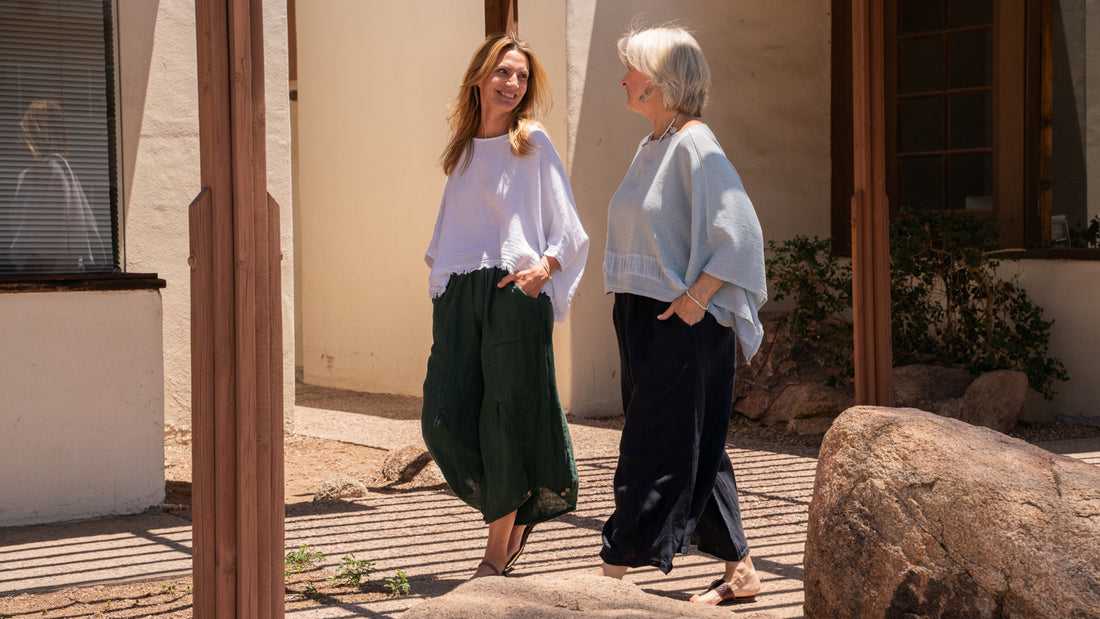
(Note: Jen wears Conscious Coterie throughout our chat, because looking pulled-together and creating a beautiful interior share the same golden rule: they should feel like you, not a trend.)
Rediscovering Your Style in an Empty Nest
Q: Let’s start with the woman who is standing in an empty nest for the first time. What is actually happening there psychologically?
Jen: One of the biggest things I see is that women suddenly have permission to rediscover themselves. For years, their homes have been a reflection of children, sports schedules, and highly practical, stain-resistant decisions. Then one day, the bedrooms are empty.
Many women tell me they walk into a room and realize they have no idea what they would choose if nobody else’s opinion mattered. It’s a bit overwhelming, but it’s also incredibly freeing. Art becomes a beautiful, zero-pressure starting point because it helps them identify what they love outside of being a mom or a manager.

Q: Is art usually one of the first purchases women make during these kinds of life transitions?
Jen: Absolutely. Whether someone is newly divorced, downsizing to a condo in North Scottsdale, or inheriting a family home, artwork becomes the emotional centerpiece. Furniture is functional. Paint is practical. But art tells a story. It’s usually the very first thing that makes a house feel like your home.
How to Buy Art Without the Snobbery
Q: What do you say to the woman who walks into a gallery on 5th Avenue, looks around, and says, “I don’t know the first thing about art”?
Jen: I tell them that is actually the absolute best place to start. There is this myth that you need an art degree or a deep understanding of historical movements and techniques to buy a painting. You don’t.
You simply need to know how a piece makes you feel when you stand in front of it. Does it calm your nervous system after a chaotic day? Does it energize you? Do you walk past it, stop, and keep looking at it? That’s the beginning of collecting.

Q: What is the biggest mistake you see first-time art buyers make?
Jen: Buying artwork to match the sofa. I know that sounds funny, but it happens every single day. People worry way too much about whether the canvas coordinates with their living room rug instead of asking whether they genuinely connect with the piece. Paint colors change. But the art you truly love tends to stay with you for life.
Making an Inherited or New Space Truly Yours
Q: Many women over 50 are navigating inherited homes or moving into a new space after a divorce. How should they approach making that space feel like their own?
Jen: Start slowly. People feel this immense, self-imposed pressure to hire a designer and immediately overhaul every square inch of the month they get the keys. I always encourage clients to just live in the home for a while first.
Notice where the morning light lands. Notice which rooms you naturally gravitate toward when you want a glass of wine. Then, begin introducing artwork that reflects your own current story, rather than someone else’s past. The goal isn’t to erase memories or history. It’s to create a home that honors both where you’ve been and exactly where you’re going next.

Q: If someone is investing in their first meaningful piece of art, where should it actually go?
Jen: Put it in the room you use the most. Don’t tuck it away in the formal dining room you use twice a year, and don’t waste it on the guest room. Put it right where you’ll see it every single day. A great piece of art should actively participate in your daily life, not feel like a cold museum exhibit.
Proportions, Textures, and Why Scale Matters
Q: How important is scale when choosing artwork for a living room?
Jen: It’s everything. In fact, most people buy artwork that is entirely too small for their walls. They get timid. But a larger, substantial piece creates an immediate impact. Paradoxically, a larger piece actually makes a room feel calmer and more organized because it anchors the entire space. When in doubt, go bigger.
Q: What kinds of artwork are women gravitating toward right now?
Jen: We’re seeing a massive shift away from overly staged, sterile interiors. Women are tired of the “showroom” look. They want pieces with real soul, texture, and movement.
They want natural materials and art that feels collected over time rather than decorated in a weekend. They want their homes to feel layered, chic, and deeply personal.

The Emotional Architecture of a Room
Q: Can artwork actually affect how we feel when we walk into a space?
Jen: Without question. Color affects your mood. Scale impacts the room’s energy. The subject matter directly influences your emotions.
The right artwork can make a room feel peaceful, inspiring, grounded, or joyful. People really underestimate how much our visual surroundings influence our daily life and mental clarity. If you surround yourself with pieces that feel heavy or transactional, you’ll feel that weight every day.
Q: For the woman reading this who is looking around her house right now and feeling completely overwhelmed, what is your best advice?
Jen: Start with one piece. Pick one wall, or focus on just one room. You don’t need to finish your entire house this month. Find just one piece that truly speaks to you. The rest usually unfolds beautifully from there.

Rapid Fire with Jen
Most overrated design rule? Thinking everything has to match. It shouldn’t match; it should converse.
One room every woman should invest in first? The room she spends the most time in.
Neutral art or vibrant color? Both, but only if they move you when you look at them.
One word that describes great art? Connection.
Ready to Write Your Next Chapter?
Creating a home after a major life transition isn’t really about interior design. It’s about identity. It’s about looking at your life and deciding what comes next on your own terms.
Whether you’re navigating an empty nest, a divorce, a new home, or simply a new season of life, the right artwork becomes so much more than canvas and paint on a wall. It becomes a visual anchor. A reflection of exactly who you are right now. And that is a beautiful place to begin.