


Why Your Linen Wrinkles and Why You Should Stop Apologizing for Them
Your linen pants are wrinkled. You pulled them out of the dryer, and they look like you wadded them up and threw them in a corner. Or you wore them for twenty minutes and now they’re creased at the knees and the lap.
And you’re wondering, “Is this normal? Did I do something wrong? Should I return these?”
No. No. And absolutely not.
Linen wrinkles. That’s not a flaw. That’s proof you’re wearing real fabric.
Linen is supposed to wrinkle. Once you understand why, you’ll stop fighting it and start embracing it.
Wrinkles Are Proof of Quality (Not a Manufacturing Defect)
Linen is made from flax fibers, which are naturally stiff and lack the elasticity of cotton or synthetic fibers. When you sit down, bend, or move, the fabric creases. It doesn’t bounce back. That’s just physics.
Cheap synthetic fabrics (polyester, rayon, nylon) don’t wrinkle because they’re made from plastic. They’re designed in a lab to resist creasing. They also trap heat, don’t breathe, and make you sweat. So at least they’re wrinkle-free.
Linen wrinkles because it’s a natural fiber. The wrinkles are proof that you’re wearing something real, not something engineered in a factory to look perfect at the expense of feeling good.

In Europe, wrinkled linen is a status symbol. It says, “I’m wearing quality natural fabric, and I’m not precious about it.” It’s the opposite of trying too hard. It’s effortless in a way that perfectly pressed polyester never will be.
So when your linen wrinkles, you’re not doing something wrong. You’re doing it exactly right.
The “Intentional Wrinkle” Look (And Why It Works)
There’s a difference between “I slept in these” wrinkles and “I’m wearing linen” wrinkles.
Slept-in wrinkles: Deep creases from being wadded up in a ball. Looks like you pulled your outfit out of the bottom of a laundry basket.
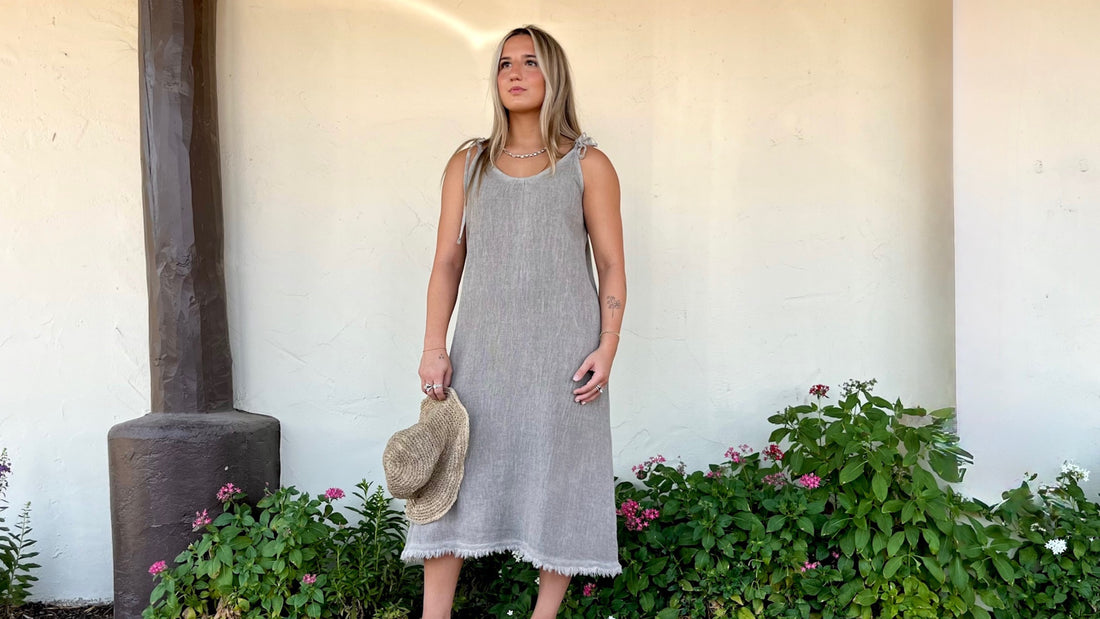
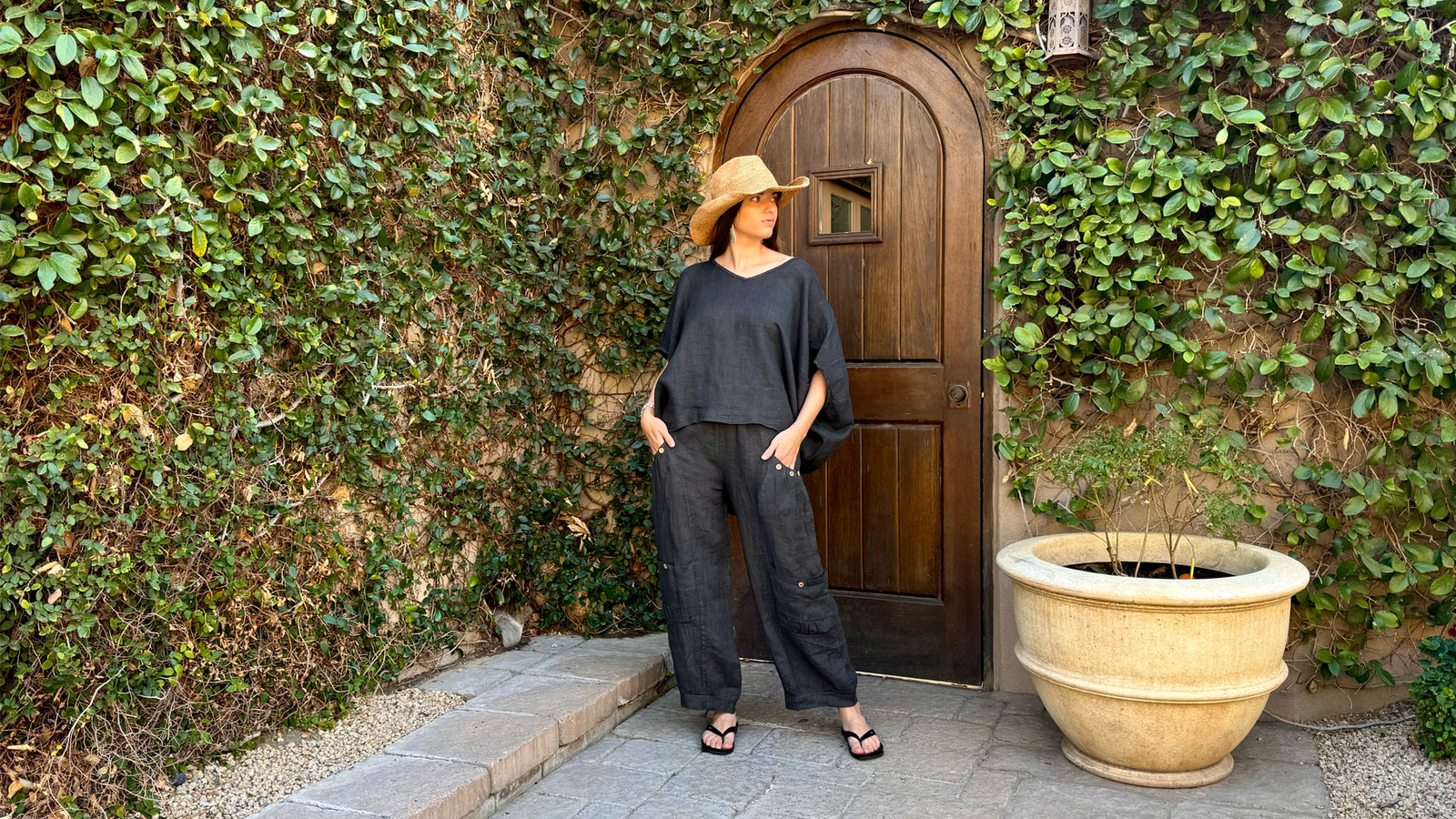
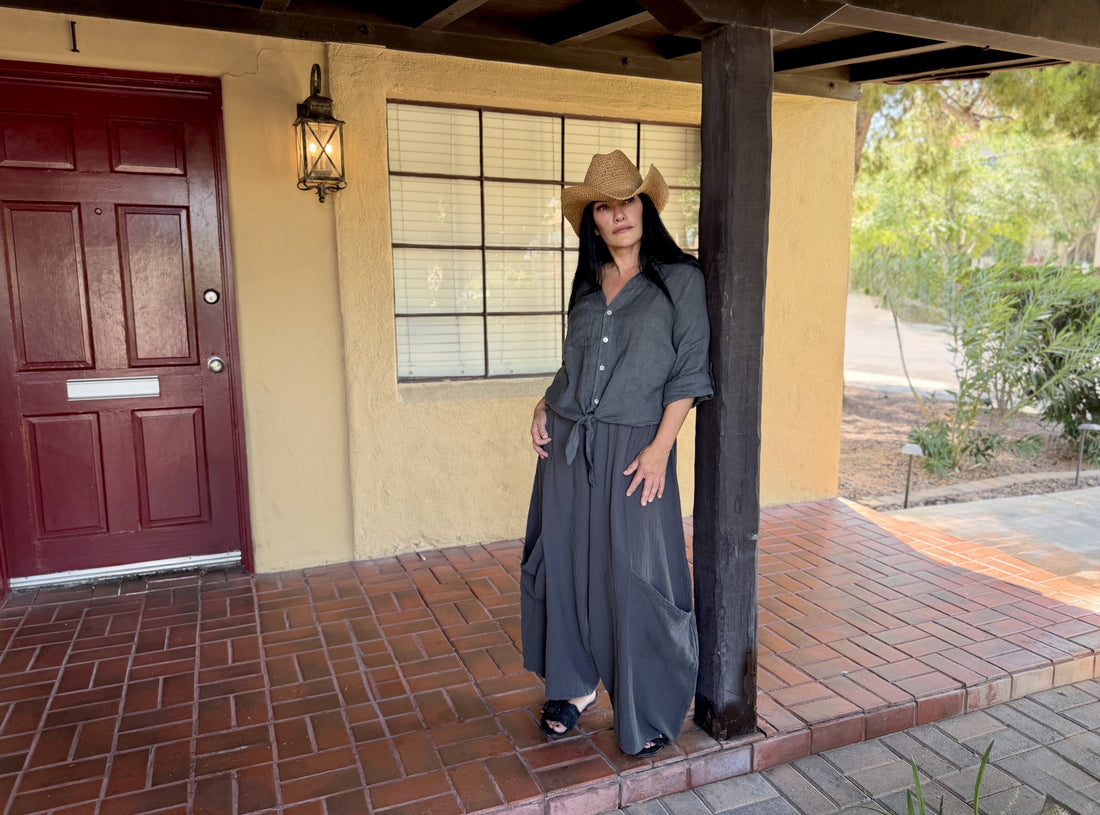
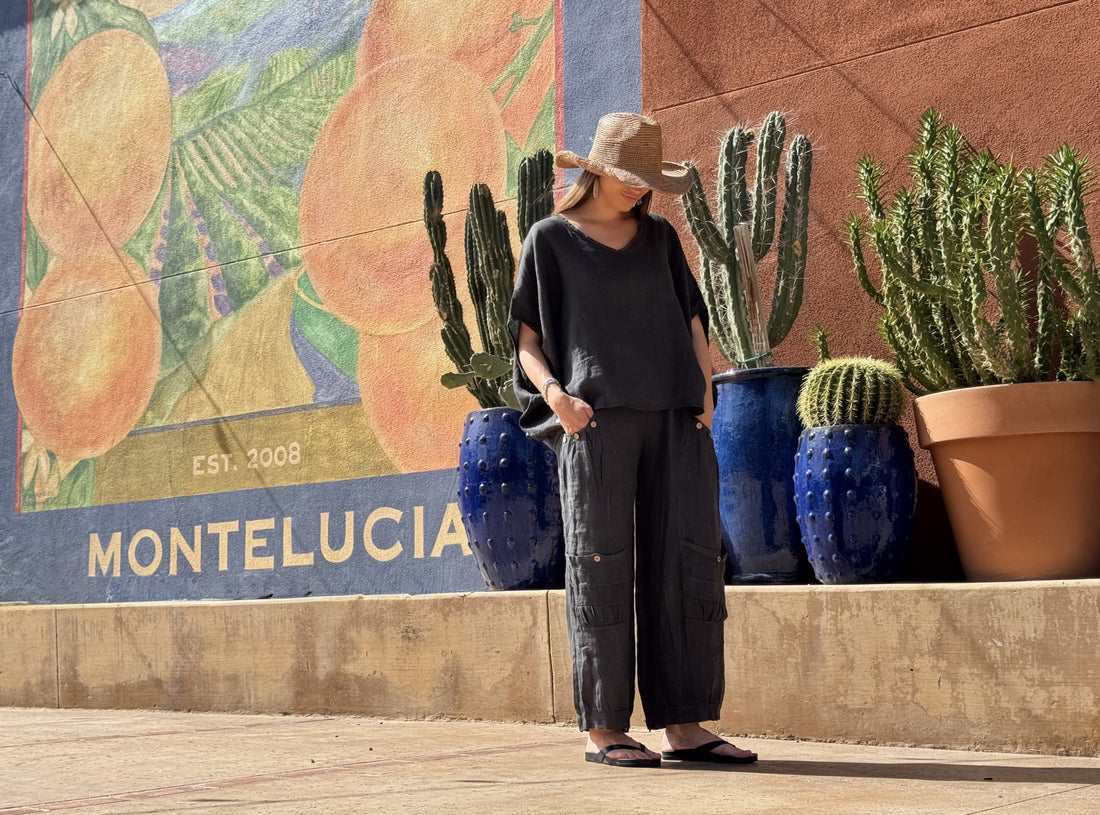
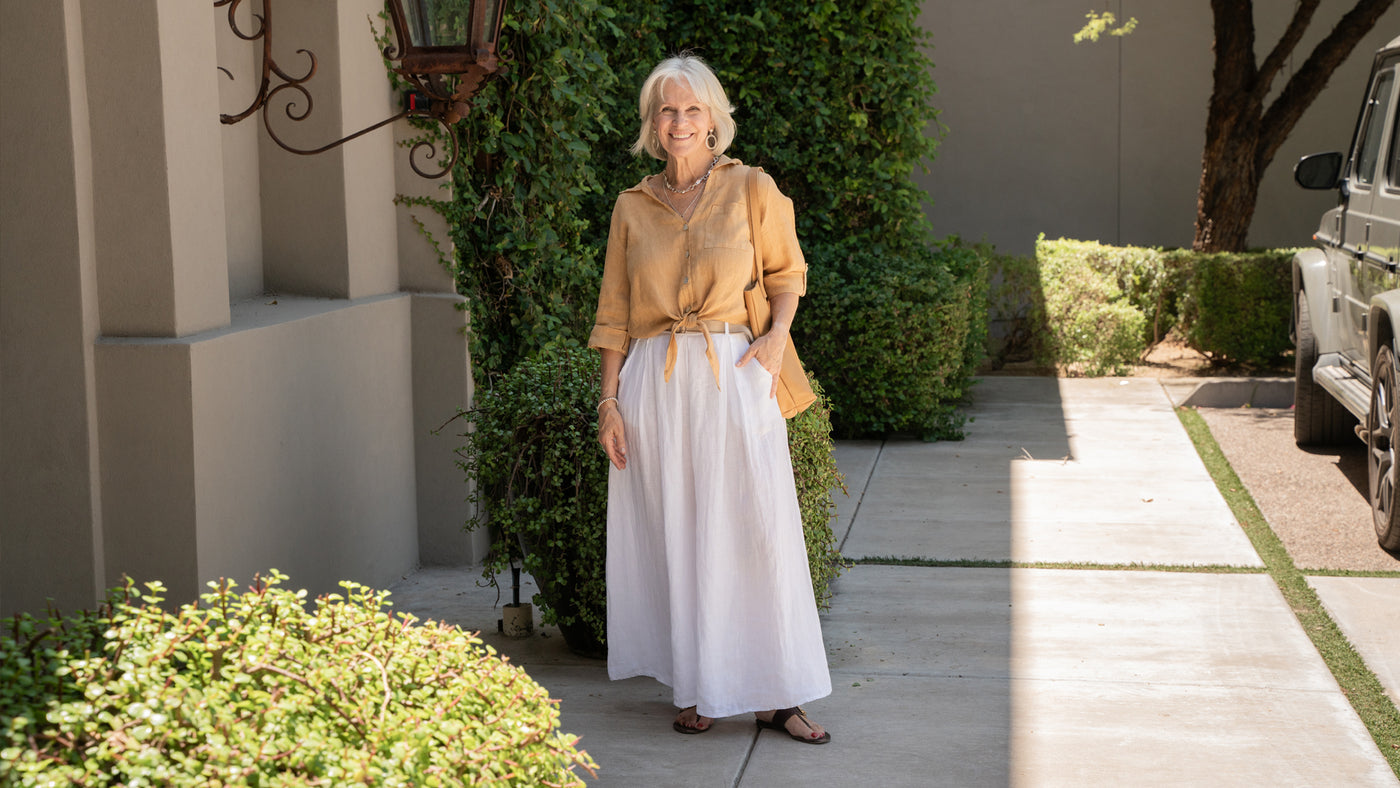
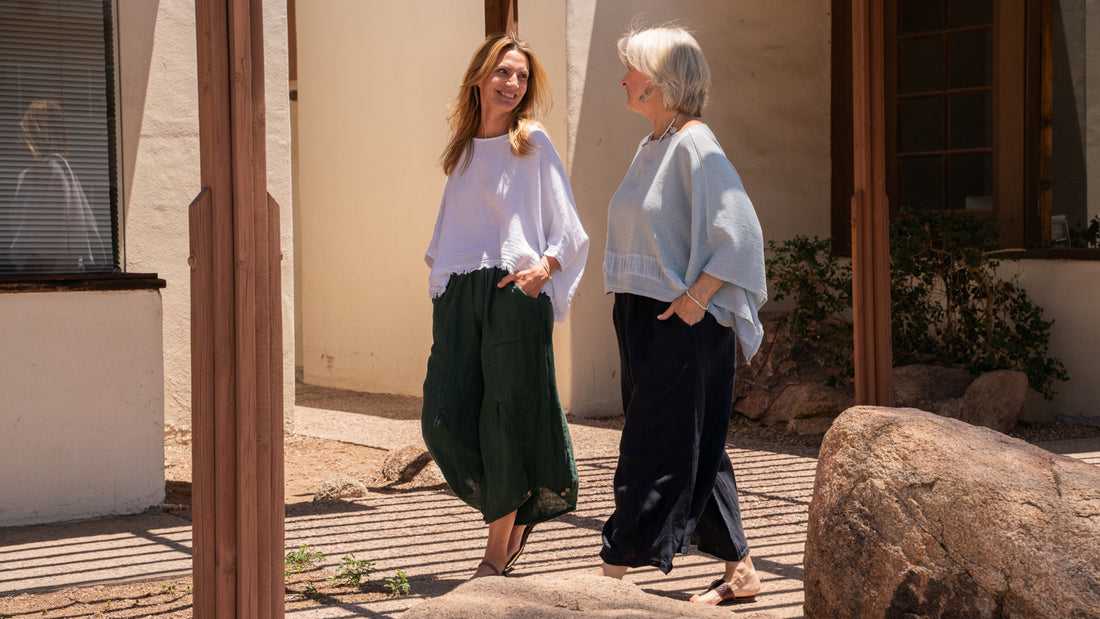
Linen wrinkles: Soft, natural creases from movement and wear. Looks textured, lived-in, and intentional.
The trick is knowing how to keep your linen on the right side of that line.
The good wrinkle:
Soft creases at the knees, elbows, or lap from sitting
Natural texture that adds dimension to the fabric
Relaxed, “I just got off a yacht in the Mediterranean” vibe
The bad wrinkle:
Deep, set-in creases from being stored incorrectly
Permanent lines from being folded in the same spot repeatedly
Looks like you need an iron, not like you’re wearing linen
The difference is subtle but important. Good linen wrinkles look intentional. Bad wrinkles look like you don’t care.
How to Care for Linen Without Losing Your Mind
You don’t need to iron linen. You don’t need to steam it every time you wear it. You just need to treat it with a baseline level of respect.
Here’s the care guide:
Washing
Wash linen in cold or warm water (not hot, which can shrink it)
Use a gentle detergent
Don’t overload the washing machine; linen needs room to move
Avoid bleach unless you want to weaken the fibers
Drying
Air-dry if possible (hang it on a hanger while it’s still damp and let it dry naturally)
If you use a dryer, use low heat and pull it out while it's still slightly damp
Don’t over-dry linen in the dryer; it sets wrinkles permanently
Storing
Hang linen pieces instead of folding them when possible
If you must fold, fold loosely and avoid creasing the same spot every time
Don’t cram linen into a packed closet where it gets crushed
De-Wrinkling (When You Actually Need To)
Most of the time, you don’t need to do anything. Linen wrinkles are part of the aesthetic. But if your linen looks genuinely rumpled (like you pulled it out of a suitcase after three weeks), here’s what to do:
Option 1: The steam trick
Hang your linen piece in the bathroom while you shower. The steam will relax most wrinkles. This is the laziest option, and it works.
Option 2: The dryer refresh
Throw your wrinkled linen in the dryer on low heat for 5-10 minutes with a damp towel. Pull it out while it’s still warm and hang it immediately. The wrinkles will soften.
Option 3: The spray bottle
Lightly mist your linen with water from a spray bottle and let it air-dry while hanging. Gravity will pull most of the wrinkles out.
Option 4: Actually iron it (if you must)
Use a medium-hot iron while the linen is still slightly damp. Iron on the reverse side to avoid shine. But honestly, if you’re ironing linen, you’re missing the point.
What NOT to Do
Don’t iron linen bone-dry. It sets wrinkles instead of removing them.
Don’t use starch. Linen doesn’t need it, and it makes the fabric stiff.
Don’t dry-clean linen unless it’s lined or structured. It’s a waste of money.
Don’t panic when your linen wrinkles five minutes after you put it on. That’s supposed to happen.
Why Wrinkle-Free Fabrics Are the Real Problem
The fashion industry has spent decades convincing you that wrinkles are bad… that you should buy easy-care fabrics that never wrinkle, never need ironing, and always look perfect.
But those fabrics are made from plastic.
Polyester, rayon, and other synthetic performance fabrics are derived from petroleum. They’re designed in labs to resist wrinkles. They also:
Trap heat and make you sweat
Don’t breathe
Smell bad after one wear (because bacteria thrive in synthetic fabrics)
Contribute to microplastic pollution when you wash them
Look cheap no matter how much you paid for them
Wrinkle-free fabrics solve a problem (wrinkles) by creating ten new problems (heat, sweat, smell, environmental damage, looking cheap).
Linen solves the real problem. You need clothes that breathe, feel good, and look expensive. The fact that it wrinkles is a small trade-off for all of that.
The European Approach (Just Wear It)
European women have been wearing linen for centuries, and they’ve figured out something American women are still learning: nobody cares if your linen is wrinkled.
In fact, perfectly pressed linen looks try-hard. It looks like you spent twenty minutes ironing your pants, which defeats the entire purpose of linen’s effortless aesthetic.
Wrinkled linen says, “I’m comfortable. I’m confident. I’m wearing quality fabric, and I don’t need it to look perfect.”
That’s the energy you want.
So stop fighting the wrinkles. Stop trying to make linen behave like polyester. Stop ironing it into submission. Stop stressing about creases that appear five minutes after you put it on.
Just wear it. Let it wrinkle. Own the texture. That’s the whole aesthetic.
And if anyone asks why your linen is wrinkled, tell them it’s supposed to be. Because it is.
Ready to embrace wrinkled linen? Visit us in Old Town Scottsdale or High Street Phoenix, or browse our linen collection online. Every piece is designed to wrinkle beautifully, because that’s what real fabric does.