


Fashion After 50 Should Not Require a Therapy Session: How to Get Dressed Without an Existential Crisis
You’re standing in your closet staring at a pile of clothes that don’t fit anymore. You’re thinking about the last time getting dressed didn’t feel like a negotiation with yourself.
You don’t want to look too young. You don’t want to look too old. You don’t want to look like you’re trying too hard. You don’t want to look like you’ve given up. You want to look current but not trendy. Polished but not precious. Put-together but not uptight.
You want to look like yourself. But who is that, exactly, when your body changed without asking permission, and nothing in your closet feels right anymore?
Welcome to fashion after 50. It’s a strange place where every outfit feels like it’s making a statement you didn’t intend, and the internet is full of advice from 25-year-olds who think “age-appropriate” means cardigans and elastic waists, or 75-year-olds wearing things you would never, ever put on your body.
The truth is dressing after 50 isn’t hard because you don’t know what looks good. It’s hard because you’re navigating a narrow band between too young and too old, and nobody’s giving you a map.
We are. This is it.
The Problem Nobody Wants to Say Out Loud
Let’s just say the quiet part out loud: most fashion advice for women over 50 is condescending garbage.
It comes in two flavors:
Flavor 1: “Age-Appropriate” Advice That Treats You Like Your Life is Over
This is the advice that tells you to dress your age, then shows you shapeless tunics, elastic-waist pants, and sensible beige cardigans. The models are either impossibly thin 60-year-olds who don’t look like you, or they’re actually 40 and playing dress-up in “mature” clothes.
The subtext is you’re invisible now. Accept it. Here’s a tunic.
Flavor 2: “You Go, Girl!” Body-Positive Pep Talks That Miss the Point Entirely
This is the advice that tells you to embrace your curves, show off your beautiful body, and love yourself at every size. It’s all crop tops and bodycon dresses and “confidence is the best accessory!”
The problem? Maybe you don’t want to show off your curves. Maybe you want privacy, not celebration. Maybe you just want to get dressed and get on with your life without making your body the main character.
Both approaches fail because they assume you either want to disappear (Flavor 1) or be seen (Flavor 2). But what if you just want to exist comfortably in clothes that look good without having to make a manifesto?
What You Actually Want (And Why That’s Not Asking Too Much)
Based on hundreds of conversations in our fitting rooms, here’s what women over 50 actually want: You want to look current without looking like you’re chasing trends.
You don’t want to dress like a 25-year-old. But you also don’t want to dress as your mother did at your age. You want clothes that acknowledge it’s 2026, not 1996.
You want to be comfortable without looking sloppy.
Comfortable doesn’t mean oversized t-shirts and leggings every day (though we respect the hustle). It means clothes that don’t dig in, don’t restrict, don’t require constant adjusting, and don’t make you count down the minutes until you can take them off.
You want to look like you put in effort, even when you didn’t.
Some days you have the energy to get dressed. Most days you don’t. You want a wardrobe where grabbing two pieces off the floor still looks intentional.
You want coverage without looking like you’re hiding.
You don’t want to show your belly, your arms, your thighs, or whatever else you’re not interested in putting on display. But you also don’t want to look like you’re wearing a bedsheet. There’s a middle ground, and nobody seems to know where it is.
You want advice from someone who gets it.
Not a 22-year-old influencer who thinks over 50 is ancient. Not a 70-year-old with completely different priorities. Someone who’s actually living in the same body-stage-age intersection you are and dressing real customers every single day.
All of this is completely reasonable. And none of it is being addressed by mainstream fashion.
Why Your Closet is Full of Clothes That Don’t Work
Here’s what happened: your body changed.
Not because you did anything wrong. Not because you let yourself go. Just because bodies change after 50. Menopause redistributes weight toward your midsection. Your waist thickens. Your arms change. Your proportions shift. Maybe you gained weight. Maybe you lost weight, and now you’re dealing with loose skin. Maybe your weight stayed the same, but everything just... moved.
And suddenly, nothing in your closet works anymore.
That dress that made you feel amazing five years ago now clings in all the wrong places. Those pants that fit perfectly don’t make it past your thighs. That top you lived in looks frumpy now, and you can’t figure out why.
So you go shopping. And you buy more things that don’t quite work. And your closet fills up with mistakes.
This isn’t a “you” problem. This is a wardrobe problem.
Your clothes are still designed for the body you had, not the body you have. And until you build a wardrobe for your actual body today, you’re going to keep having the same frustrating experience.
The 5 Principles That Actually Make Dressing Easier
Forget trends. Forget rules. Here are the five principles that make getting dressed after 50 easier, not harder.
Principle 1: Prioritize Fabric Over Everything
The single biggest difference between looking expensive and looking cheap is fabric quality.
Polyester, rayon, and cheap jersey knit will betray you every time. They cling. They pill. They don’t breathe. They look shabby after three washes. And they make you look heavier than you are because they hug every curve you're trying to cover.
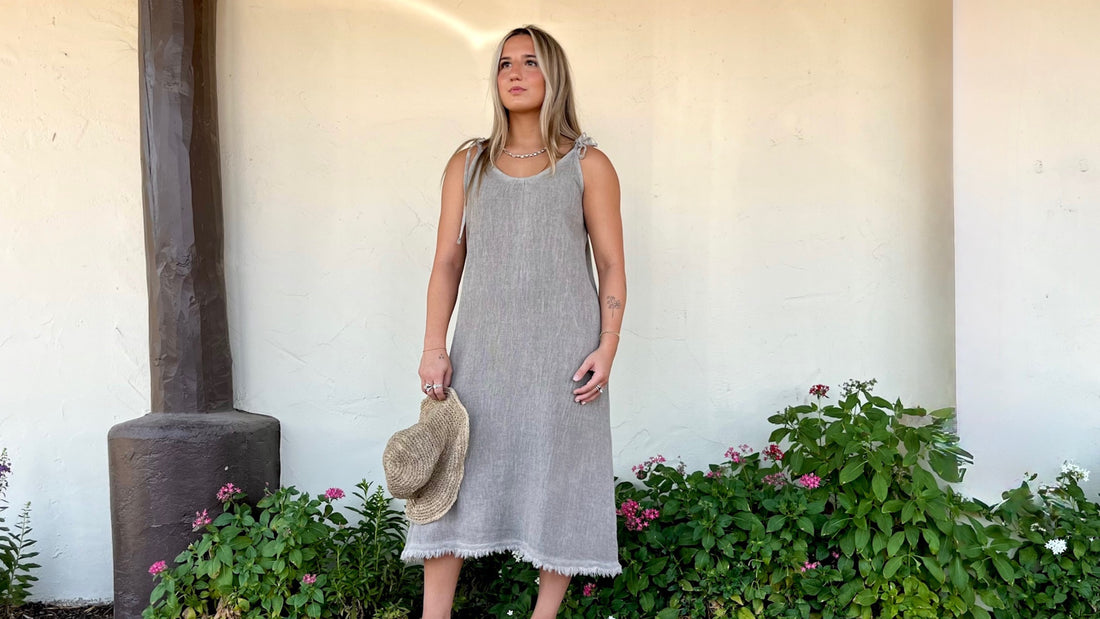
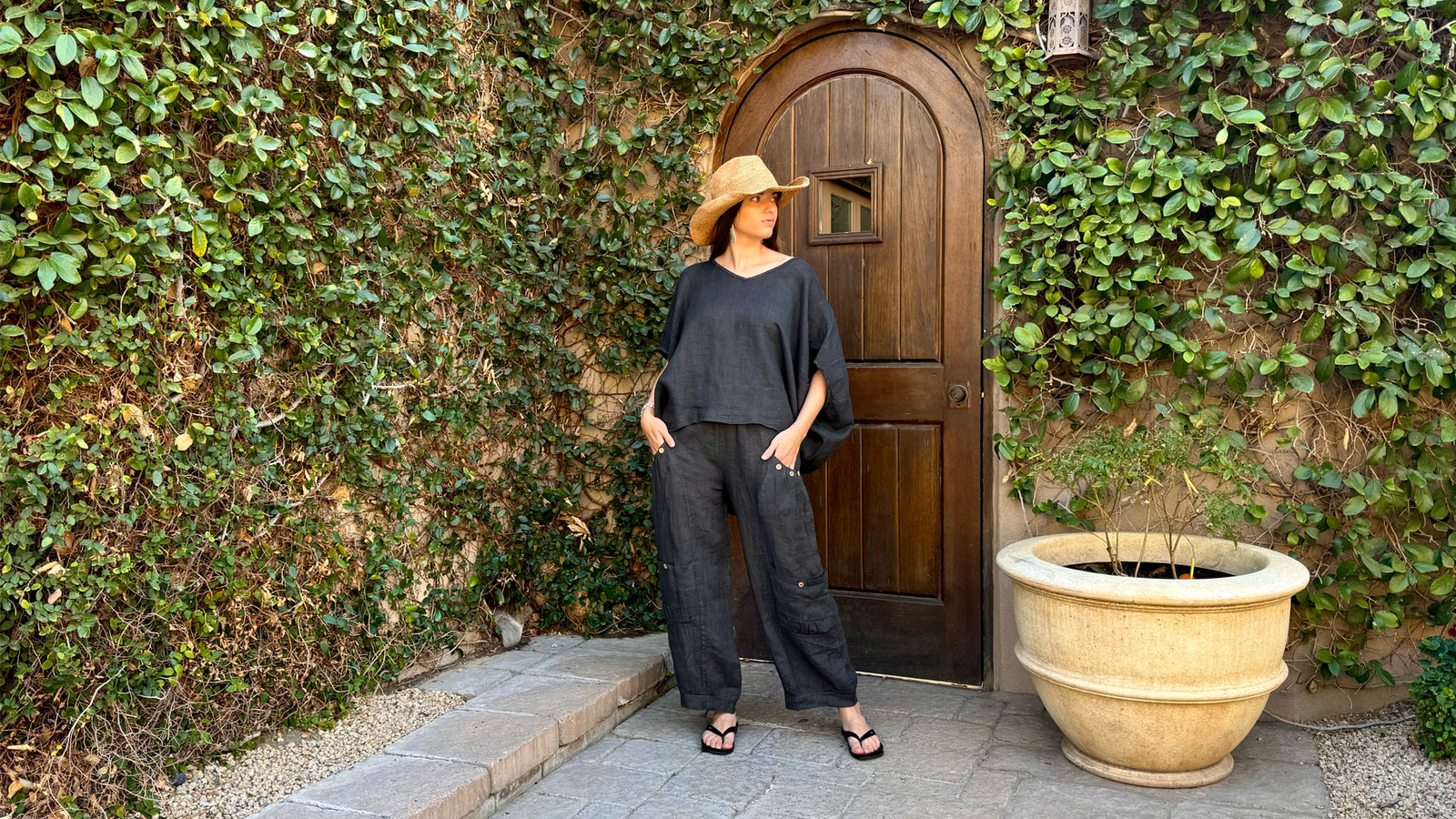
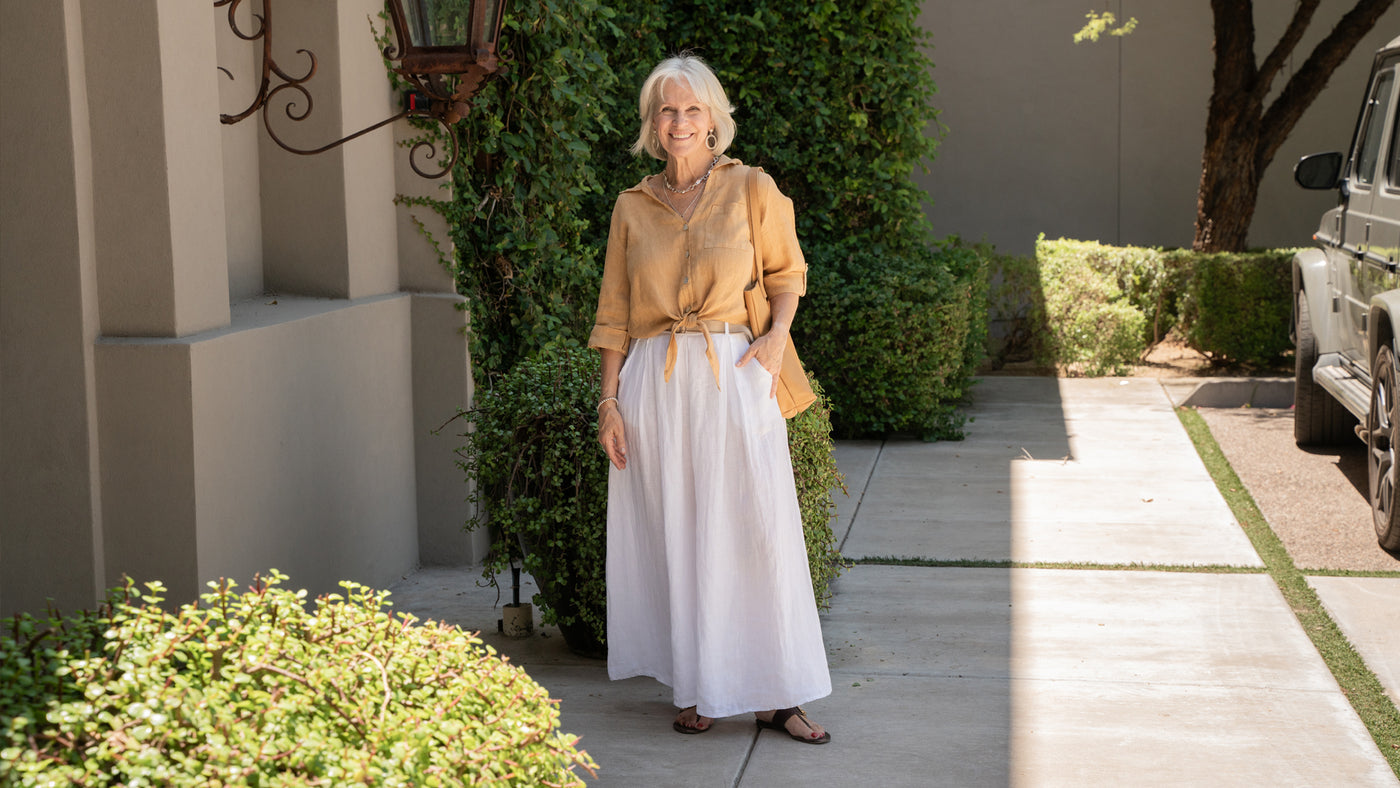
Natural fabrics, including linen, cotton, and leather, drape instead of cling. They breathe. They signal quality without logos. And they make you look like you know what you’re doing.

If you only make one change to your wardrobe, make it this: stop buying cheap fabric. Buy less, but buy better. A linen top costs more than a polyester top, but you’ll wear it for years instead of months.
Principle 2: Build Around Three Neutral Colors (Not Ten)
Decision fatigue is real. And having a closet full of random colors that don’t coordinate makes getting dressed exponentially harder.
Pick three neutral colors that work for your skin tone (navy, beige, olive, charcoal, taupe, camel, or whatever combination makes sense for you). Build your entire wardrobe around those three colors.
Now everything matches. You can grab any top and any pair of pants, and they work together. Getting dressed takes three minutes instead of twenty.
This is how European women dress. They’re not more stylish. They just have fewer decisions to make.
Principle 3: Choose Structure Over Volume
There’s a difference between relaxed-fit (good) and shapeless tent (bad).
After 50, your instinct might be to hide your body in oversized everything. Big boxy tops. Wide shapeless pants. Baggy cardigans. But when everything in your outfit is oversized, you don’t look smaller. You just look like you’re wearing a lot of fabric.
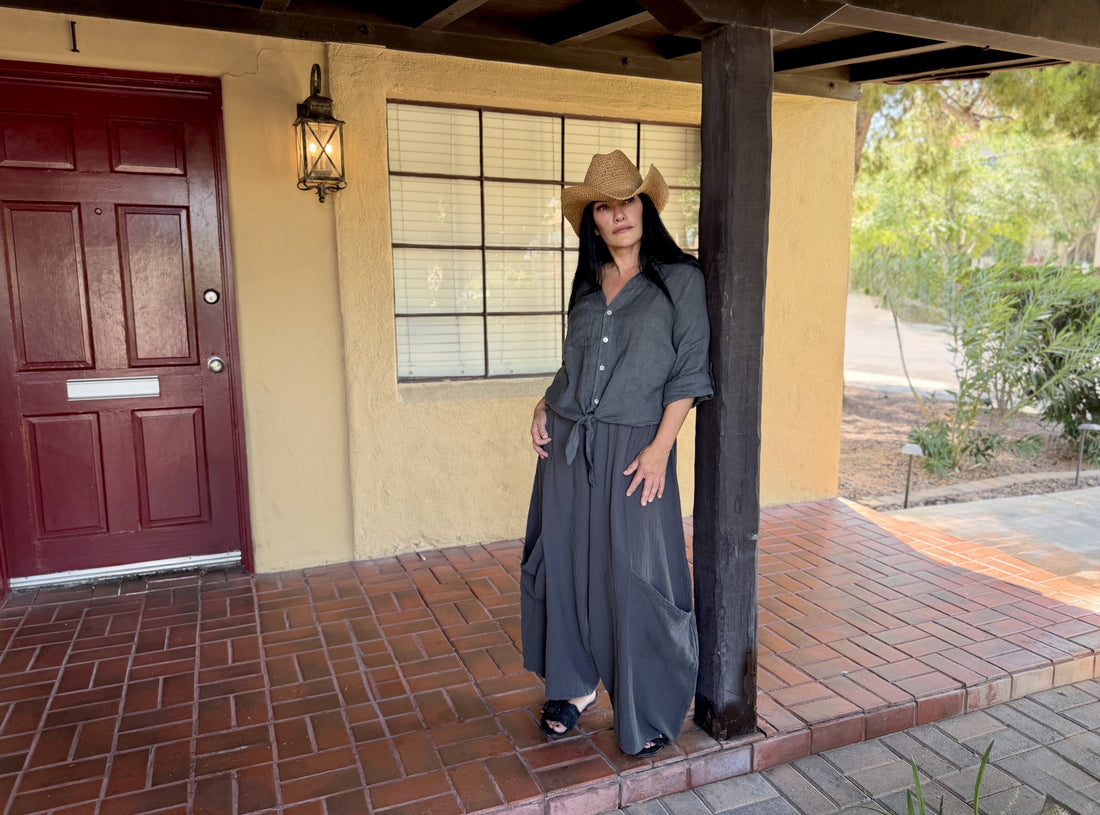
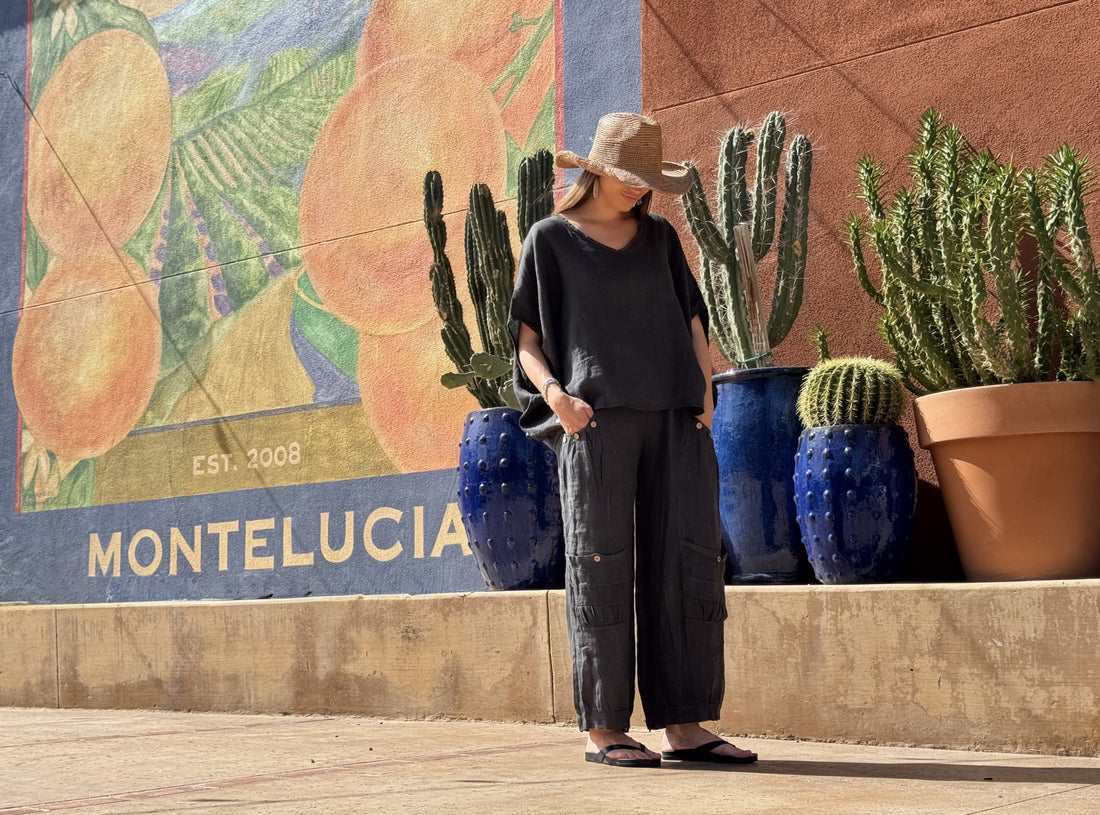
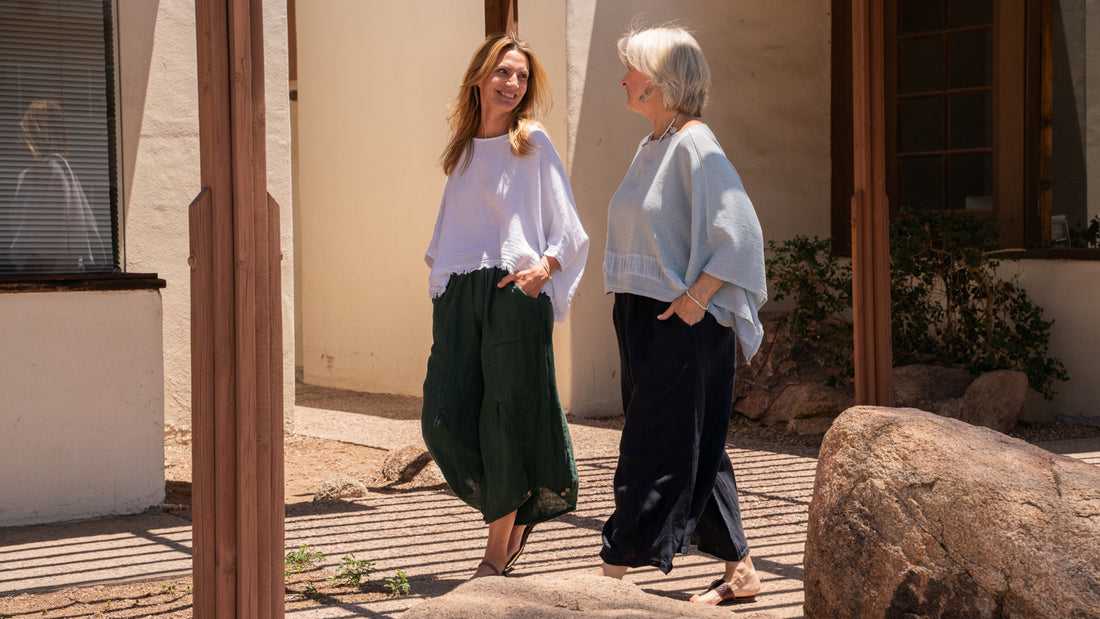
Structure creates shape. A top that skims your body without hugging it looks better than a top that hangs like a bedsheet. Wide-leg pants work because they’re fitted at the waist and flow from there; they have structure where it matters.
You want ease, not excess. Clothes that move with you, not drown you.
Principle 4: Create One Focal Point Above the Waist
If you’re trying to de-emphasize your midsection, hips, or thighs, you need to give people something else to look at.
This is why statement jewelry works. Why colored leather jackets work. Why interesting scarves work. You’re creating a focal point above the waist (near your face, on your shoulders, around your neck) that draws the eye up and away from the areas you don’t want highlighted.

Your outfit should have one statement piece. Let that piece do the work.
This is also why our Turkish ring and Turkish bracelet collections exists. Statement rings draw attention to your hands, which are always visible when you’re talking, gesturing, or holding a drink. Nobody’s looking at your belly when they’re admiring your ring.
Principle 5: Dress for Today, Not Five Pounds From Now
Stop buying clothes for the body you hope to have in three months.
You know what happens? They sit in your closet with the tags on. They guilt-trip you every time you open the door. And you never wear them because you’re waiting to “earn” them.
Buy clothes that fit your body today. Right now. As it is. Not aspirational sizing.
When you wear clothes that actually fit, you look better immediately. You feel better immediately. And getting dressed stops being a referendum on your body and starts being a functional task you can complete in under five minutes.
The Part Where We Tell You What We Actually Do
We’re not here to sell you trends. We’re here to help you build a wardrobe that makes getting dressed easier.
That means:
Quality natural fabrics (linen, cotton, leather) that breathe and drape instead of cling.
Pieces designed for midsize bodies (US 8-14) in midlife, not thin 25-year-olds or generic plus-size.
Colors that actually work for women over 50 (warm neutrals, not pastels that wash you out).
Silhouettes that create balance and coverage without looking like you’re wearing a tent.
A team that will pull options for you based on your actual body today, not some aspirational version.
Walk into our Old Town Scottsdale or High Street Phoenix boutique and tell us where you’re stuck. We’ll pull pieces. You’ll try them on. You’ll see the difference. And you’ll walk out with a plan that lets you get dressed in five minutes without an existential crisis.
The Bottom Line
Fashion after 50 isn’t about following rules or trends or advice from people who don’t understand what you’re dealing with.
It’s about building a wardrobe of quality pieces in colors that work for you, silhouettes that fit your actual body, and fabrics that don’t betray you after one wash.
It’s about reducing decision fatigue, so getting dressed takes minutes instead of an hour.
It’s about creating focal points above your waist so people look at your face, not your midsection.
It’s about dressing for your body today and feeling like yourself again.
You’re not asking for too much. You’re asking for clothes that work. And that’s exactly what we’re here for.